What Is Customer Retention and Why Does It Matter for Independent Cafés?
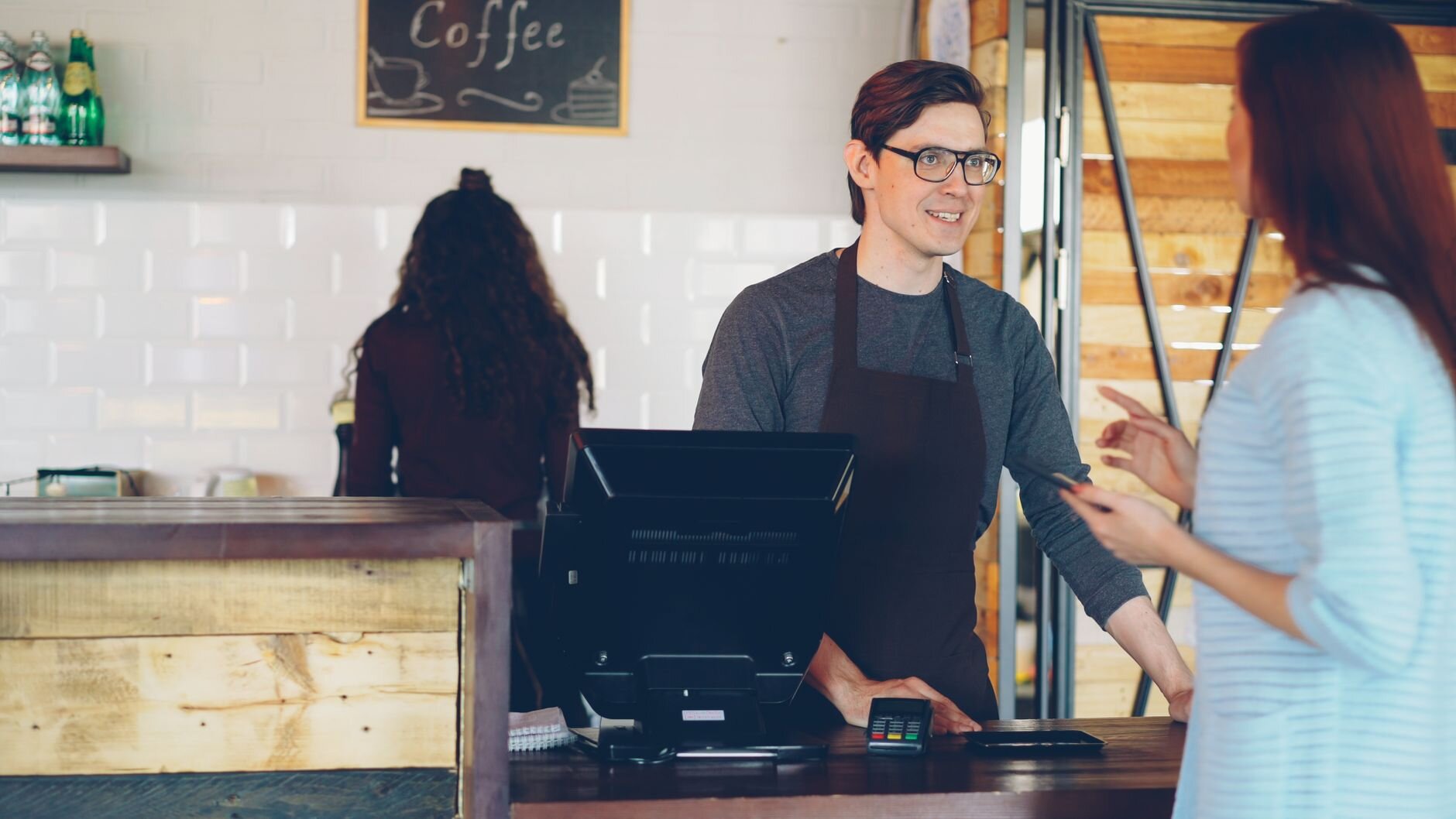
She came in every Tuesday morning — laptop bag, oat flat white, corner table. For two years, she was as reliable as the 8:15 bus. Then one day she wasn’t. No explanation. No goodbye. Just gone. Did she move? Find somewhere closer? Start using the drive-through Costa on the ring road? You don’t know, because you had no way to track it.

That moment — that feeling of losing a regular and not knowing why — is the customer retention problem in a nutshell. This article explains what customer retention actually means for a café (not a software company), how to calculate your own rate in under a minute, and what genuinely moves the needle. For the full tactical playbook, see our full guide to café customer retention.
Customer Retention, in Plain English
Customer retention is your ability to turn first-time visitors into regulars — the customers who choose your café week after week instead of going somewhere else.
It’s a measure, not just a feeling. Specifically, it’s the percentage of your customers who return after their first visit. The opposite — when customers stop coming back — is called churn. A customer who visits once and never returns is a churned customer. One who’s been in every Friday for three years is retained.
Here’s the thing: you already understand this concept. You just call it something different. You call them your regulars. Customer retention is simply the business language for what you’ve been caring about since you opened.
One nuance worth noting: loyalty is the feeling — the emotional connection a customer has to your café. Retention is the measurable result. You can have loyal customers who don’t visit often enough, and retained customers who come purely out of convenience. Retention is what you can count.
What Customer Retention Is NOT
Before going further, it helps to clear up what retention is commonly confused with.
It’s not the same as customer satisfaction. A customer can leave a glowing five-star Google review and never return. Satisfaction is a snapshot; retention is a pattern over time.
It’s not just a loyalty card. A loyalty programme is one lever — and a very effective one — but retention is the outcome that lever is trying to achieve. Running a stamp card doesn’t automatically mean you’ve solved the problem.
It’s not about discounts. Price-driven return visits are the weakest form of retention. Customers who only come back for an offer leave the moment a competitor runs a better one. Lasting retention is built on experience and relationship, not perpetual promotions.
It’s not a big-brand metric. A two-person café with 200 loyal regulars has a healthier retention picture than a chain with a million one-time app downloads.
How to Calculate Your Customer Retention Rate
The Customer Retention Rate (CRR) sounds technical but it isn’t. It’s just this: of all the customers you had at the start of a period, what percentage still came back by the end?
The formula:
CRR = (Customers at end of period − New customers gained) ÷ Customers at start of period × 100
Here’s a real example. Say you run an independent café in Manchester. In January, around 200 customers visit regularly. Over February, 40 new faces come through the door. By the end of February, 180 of your regulars are still coming in. Your CRR is:
(180 − 40) ÷ 200 × 100 = 70%
Seventy per cent of your existing customers kept coming back. The other 30% is your churn rate.
Most café owners don’t have exact customer counts, and that’s precisely the problem. When you’re working from gut feeling, you can’t tell whether retention is improving or declining until it’s too late. A digital loyalty card tracks this automatically — every stamp and redemption is a record of who returned and when.
What’s a Good Retention Rate for an Independent Café?
Published café-specific benchmarks are scarce. Most data you’ll find online is for SaaS companies (where 85–95% is healthy) or e-commerce (25–35%) — neither translates well to a café.
A more useful measure for your business is your repeat visit rate within 30 days: what percentage of first-time visitors come back within a month? A customer who returns within the month is showing genuine retention behaviour. One who waits six months — or never comes back — has effectively churned, even if they’d say they liked your coffee.
Industry data suggests that for many independent cafés, regular customers account for the majority of revenue, which means protecting this group is your highest-return activity regardless of where your rate currently sits.
The more useful question isn’t “what’s a good rate?” — it’s “is mine going up or down?” If your retention rate is improving month on month, you’re doing the right things.
Why Retention Matters More Than Acquisition
Here’s the number that changes how most café owners think about this: research by Bain & Company suggests that acquiring a new customer can cost five to seven times more than retaining an existing one. A landmark study by Bain & Company also found that a 5% improvement in retention can increase profits by 25–95%.
Let that land in real terms.
A regular who buys a £4.50 flat white three times a week is worth around £700 a year to your café. Lose them to the chain around the corner, and you’d need to spend significantly more in marketing and effort just to replace that revenue with new customers — each of whom starts as a stranger with no reason to stay.
Research consistently shows loyal customers spend significantly more than first-timers. A one-off visitor is worth their single transaction. A retained customer compounds in value over months and years.
This is why understanding how to increase coffee shop sales starts with keeping the customers you already have, before chasing new ones.
The Three Things That Make Customers Come Back
Retention comes down to three factors working together.
Experience
Customers return when visiting your café feels good. The warmth of the welcome, the consistency of the coffee, the atmosphere — these are the foundation everything else sits on.
Experience is the hardest thing to recover once damaged. One genuinely unpleasant visit can end a relationship that took months to build. And no loyalty scheme will rescue a café where the experience is letting people down — it just delays their departure.
Habit
Regulars are regulars because your café fits into their routine. On the way to work. After the school run. A weekend ritual. Retention strategy is largely about making that habit easy to form and maintain.
Friction breaks habits: a queue that’s always too long, a payment system that doesn’t accept cards, running out of the thing they always order. Each friction point is a small push towards trying somewhere else. Your job is to remove every reasonable reason to choose a competitor on a habit-visit day.
Reward
A tangible reward — a free coffee after ten visits, a birthday treat — gives a customer a concrete reason to choose your café over the equally good one around the corner. When the coffee and atmosphere are comparable, the reward tips the decision.
This is where a loyalty programme earns its place. Not as a substitute for experience or habit, but as a reinforcement. Done well, it turns an occasional visitor into someone who actively counts down to their next reward. Industry data suggests loyalty programme members visit more frequently — in some sectors, up to 50% more often than non-members.
The Independent Café Advantage
There’s an elephant worth naming. Costa, Starbucks, and Pret have app ecosystems, CRM teams, and loyalty budgets that dwarf most independents’ annual turnover. It’s easy to conclude the game is rigged.
But chains compete on scale. You compete on relationship — and these are not the same game.
The barista who remembers a customer takes their latte with oat milk and no sugar. The owner who asks after someone’s new job. The corner table a regular thinks of as theirs. These are retention assets that no app development budget can manufacture. They’re the structural advantage of being small, embedded, and genuinely human.
Lumina Intelligence 2025 data puts the UK café sector turnover at £6.1 billion, with more than 15% of UK adults buying out-of-home coffee every week. The market is large enough for independents to build deeply loyal communities that chains simply cannot replicate.
What has changed is the tool gap. Running a digital loyalty programme once required enterprise infrastructure. Now the same mechanics are available to a two-person café for free, living in Apple Wallet and Google Wallet. The playing field hasn’t levelled — but the tool gap has closed.
Ready to Keep More of Your Customers?
You now know what customer retention is, how to measure it, and what moves it. The next question is where to start.
For the full tactical strategy, our full guide to café customer retention covers how to build habits, structure rewards, and track what’s working.
If you want to give the reward lever a try today, BaristaCard is free to start and takes around five minutes to set up. Your customers don’t need to download anything — the card lives in Apple or Google Wallet, keeping the barrier as low as possible. You get automatic visibility into who’s coming back and how often. If you want to compare options first, take a look at the best loyalty card options for UK cafés.
Your regulars already exist. Some of them are in your café right now. This is just about making sure they keep choosing you — and that when they do, you know about it.
Ready to boost your cafe's loyalty?
BaristaCard helps cafes turn one-time visitors into regulars with digital stamp cards, rewards, and real-time insights. Free to get started.
Comments (0)
Log in to leave a comment.